ReDot Fine Art Gallery respects Indigenous communities and culture and advocates the practice of purchasing exclusively from community art centre organisations.
Indigenous and Torres Strait Islander viewers are advised that this publication may contain images, names, references and/or stories of deceased persons which may cause sadness or distress.
04 mar 2026
KANPARKANYA
THE WANAMPI
A Solo Exhibition by Timo Hogan
In collaboration with

and

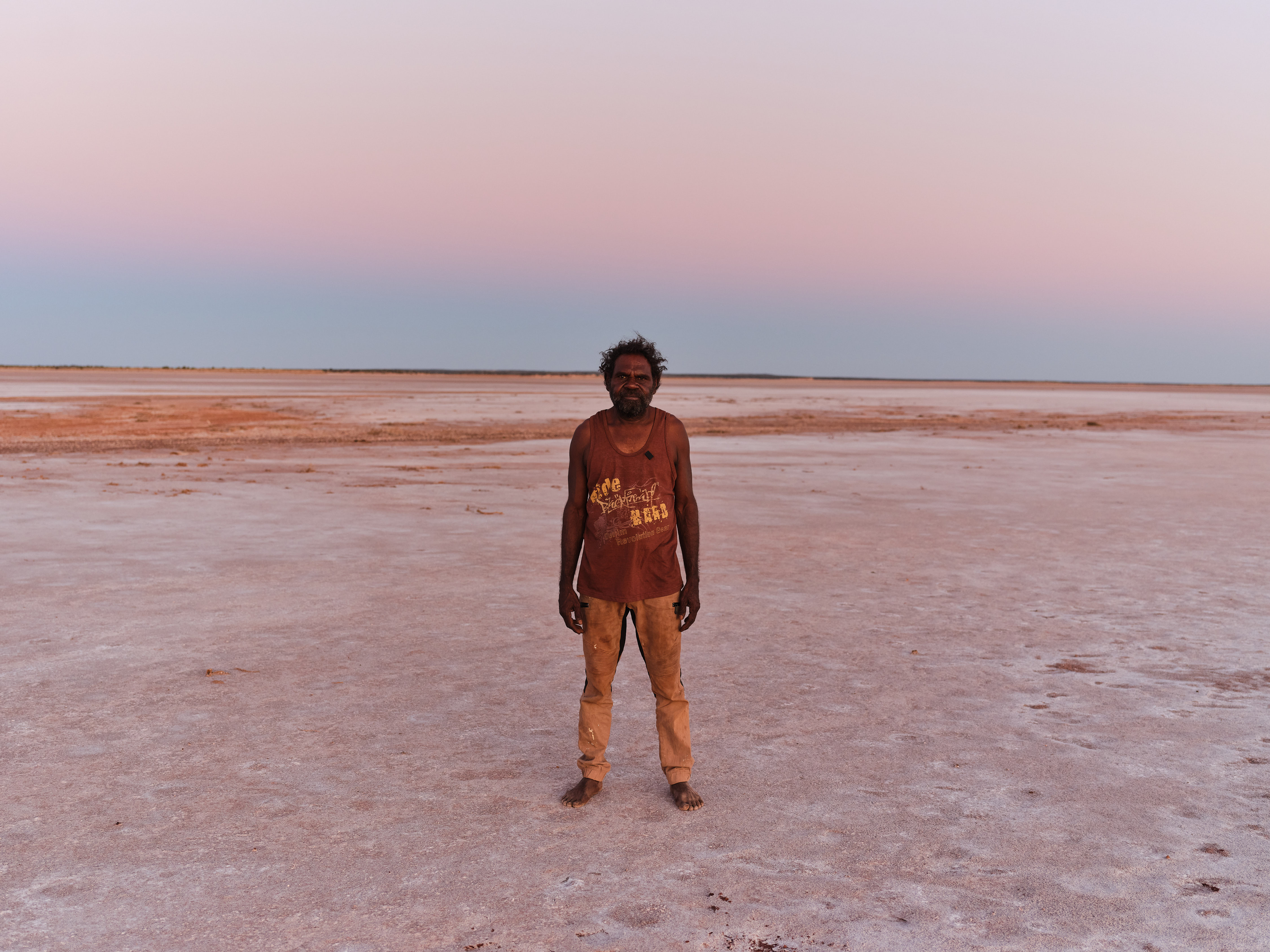
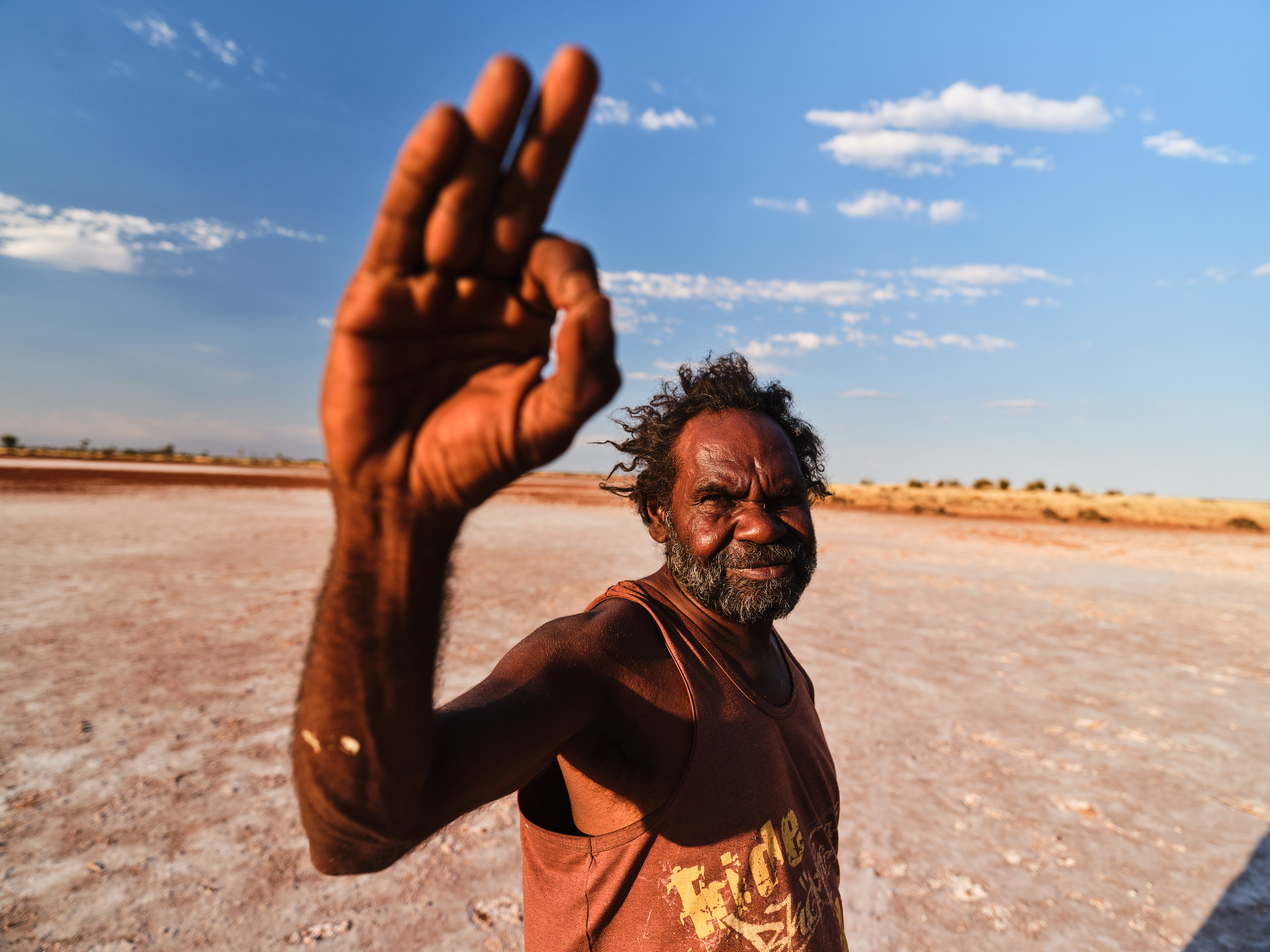
Timo standing on Lake Baker | © Duncan Wright
ReDot Fine Art Gallery
presents
KANPARKANYA
THE WANAMPI
A Solo Exhibition by Timo Hogan
04 Mar | 24 Apr 2026

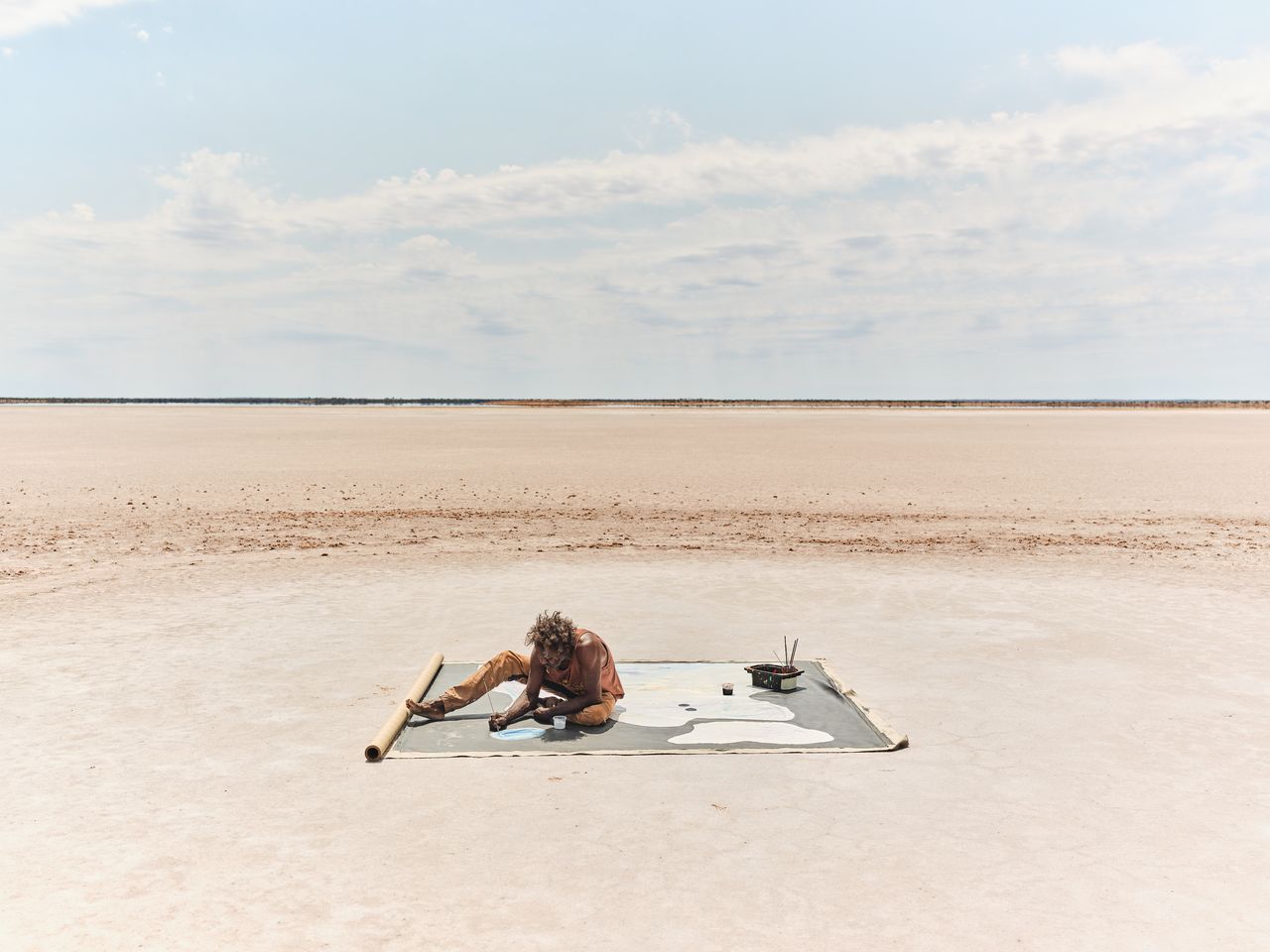
Timo painting canvas 25-404 on Lake Baker | © Duncan Wright
![Australian Indigenous (Aboriginal and Torres Strait Islander) artwork by TIMO HOGAN of Spinifex Artists. The title is Lake Baker. [24-294] (Acrylic on Linen)](https://media.redotgallery.com/stockroom/gallery/l/artwork/t/lake-baker-6215-LARGE-3.png)
Lake Baker
24-294 (2024)
Acrylic on Linen
TIMO HOGAN
Lake Baker
24-294 (2024)
Acrylic on Linen
290 x 600cm | 114.17 x 236.22in
ENQUIRE
lake baker - timo's story
KaNparkanya - The Wanampi
Timo Hogan does not paint the picture. He paints the story. And the story is the big picture. He calmly applies the paint to Lake Baker with the quiet authority of someone recreating the country they know intimately. For here at Lake Baker, Timo tells of the religion within the landscape and the inhabitants that made it so. He surveys the Wati Kutjara Tjukurpa (Two Men Creation Line) of his birthright and brings this into focus on the two dimensional plane for all to see.
In these composition Timo has depicted the Two Men as the physical manifestation of two small grass knolls upon the lake. The two men carefully monitor the lakes expanse as the ever present Wanampi (powerful water serpent) defines the perimeter of the lake, always watching, aware of the Two Men.
It is this interaction between the inhabitants of the lake that is ever present and allows Timo the creative latitude of a constantly changing landscape. These characters that Timo talks of are the Creation beings. Those that came before and shaped the environment as they moved through it, leaving indelible physical reminders of their power and presence for all to see. But they also intertwined a religious moral framework within the habitat and covered it with song and dance.
In some of these works Timo has used sand collected from lakes north of Tjuntjuntjara to provide texture to Lake Baker. Timo created these works to explore the tactile contrasts of Lake Baker that occur through time. Timo often talks of the changes in the Lake he observes when he visits as pana (sand) blows onto the lake in drought and how this sand is later replaced with the crystalline salts after great desert floods. As wind and rain change the lake the indelible marks of its creations beings remain stark.
![Australian Indigenous (Aboriginal and Torres Strait Islander) artwork by TIMO HOGAN of Spinifex Artists. The title is Lake Baker. [24-10] (Acrylic on Linen)](https://media.redotgallery.com/stockroom/gallery/l/artwork/t/lake-baker-6203-LARGE-2.jpg)
Lake Baker
24-10 (2024)
Acrylic on Linen
TIMO HOGAN
Lake Baker
24-10 (2024)
Acrylic on Linen
200 x 580cm | 78.74 x 228.35in
ENQUIRE
![Australian Indigenous (Aboriginal and Torres Strait Islander) artwork by TIMO HOGAN of Spinifex Artists. The title is Lake Baker. [23-318] (Acrylic on Linen)](https://media.redotgallery.com/stockroom/gallery/l/artwork/t/lake-baker-6202-LARGE-3.jpg)
Lake Baker
23-318 (2023)
Acrylic on Linen
TIMO HOGAN
Lake Baker
23-318 (2023)
Acrylic on Linen
200 x 290cm | 78.74 x 114.17in
ENQUIRE
![Australian Indigenous (Aboriginal and Torres Strait Islander) artwork by TIMO HOGAN of Spinifex Artists. The title is Lake Baker. [24-148] (Acrylic on Linen)](https://media.redotgallery.com/stockroom/gallery/l/artwork/t/lake-baker-6204-LARGE-2.jpg)
Lake Baker
24-148 (2024)
Acrylic on Linen
TIMO HOGAN
Lake Baker
24-148 (2024)
Acrylic on Linen
200 x 290cm | 78.74 x 114.17in
ENQUIRE
![Australian Indigenous (Aboriginal and Torres Strait Islander) artwork by TIMO HOGAN of Spinifex Artists. The title is Lake Baker. [24-157] (Acrylic on Linen)](https://media.redotgallery.com/stockroom/gallery/l/artwork/t/lake-baker-6212-LARGE-2.jpg)
Lake Baker
24-157 (2024)
Acrylic on Linen
TIMO HOGAN
Lake Baker
24-157 (2024)
Acrylic on Linen
200 x 290cm | 78.74 x 114.17in
ENQUIRE
“My father told me, ‘When you grow up you
will hold the Tjukurpa for this place and
will have to speak up for it,
this is your country.”
Timo Hogan 2025
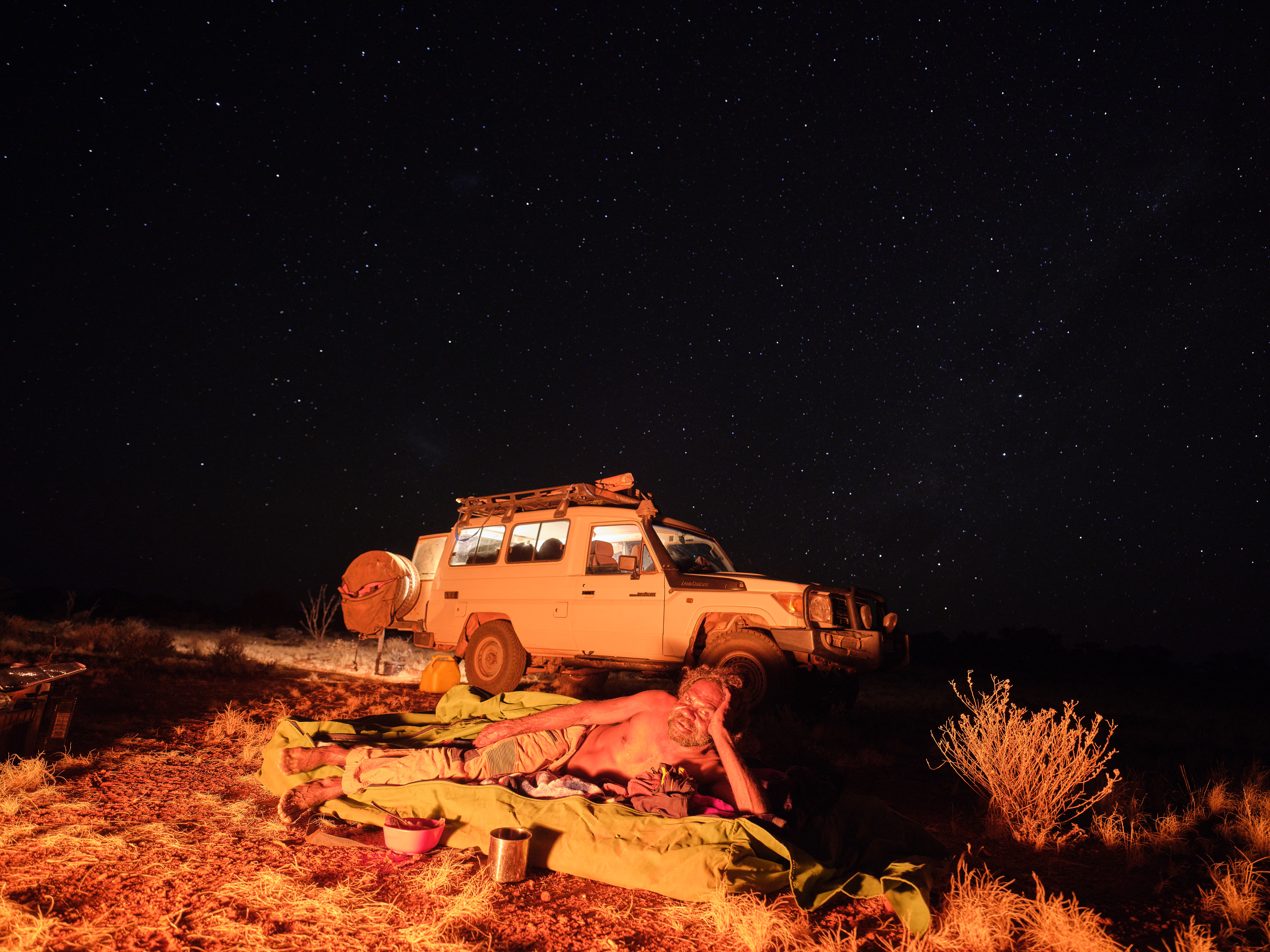
Timo with his troupé on Lake Baker | © Duncan Wright
An essay by brian hallett
There is a deeper essence to be found when you gaze upon an artwork, as you attempt to find your own meaning and make sense of someone else’s creative viewpoint. One needs familiar reference points as a pathway through, lest you lose your footing in this world. But what you see when you view Timo Hogan’s deliberate, almost behaved compositions, is countless millennia of observing and understanding the spiritual structure that lay within an existing landscape. This is a living, breathing, heritable doctrine that was formed by the first beings, who not only had metamorphic powers of transformation, but also dramatised their own movements in the environmental formations they themselves left behind.
Timo Hogan knows this and breathes this, not as a studied tangible fact but a learnt oral knowledge, transposed and displayed over vast distances of changing terrain, and linked by other kin, known or otherwise. This is a complex, interwoven experience that encompasses the flora, fauna, and ecology of particular sites where past and present time coincide in epic narratives that have you standing at the centre of a Creation drama as it unfolds around you. Lake Baker is one such place.
When Timo Hogan stands at the edge of Lake Baker, it is not a gigantic salt lake that he sees but a scene of drama, a purposeful habitat where known seismic events took place, before a moral account was placed upon these foundations. This is Tjukurpa, the physical manifestation of Creation history within the observed environment. The lone, two-grassed hillocks within the lake’s perimeter stand as stark reminders of the performance that played out. The great swathes of earth moved from the lake itself; state serious business eventuated here. The crystal waters of the nearby, ground-level, rock hole denote purity in the surrounding chaos. The large red bluff that protrudes skyward in the distance tells of relationships forged in battle.
The characters who perform are chosen by destiny, from too long ago. A Wanampi, a powerful water serpent, a guardian of its source, a feared aquatic presence from the depths. A being that belongs here, resides here, and hunts in the surrounds. This is Wati Wanampi, a man, a revered anthropomorphic, masculine figure who can know the whereabouts of all, as he patrols the perimeter of the site. And this he does daily.
Next are the Two Men. Themselves, holders of enormous power, with a history of traversing the country and its most important sites. They too belong here, and form part of the panorama of evidence that Timo must translate. Like others, they are also kin, brothers of a reptilian past, who together must circumnavigate the perils of their journey. Lake Baker is part of that odyssey.
Is Wati Wanampi friend or foe? For Timo Hogan, he is a kindred spirit brought forth through countless generations beforehand, the truth be known, he is family. And although he must be appeased, Timo has the right of passage through correct protocol, a form of ritual, of introduction, of recognition, and reconnection, only then can access be granted. The stage is set, the backdrop is prepared, and the tragedy must begin. But as with any theatre, any multidimensional ringside event of plot casting and time travelling, it is a dramatic episode full of possible scenarios, this is just round one. The painting can begin.
Timo says he sometimes senses that Wanampi nearby, in the cool breeze of the evening, or when the salty air is circulating on the nose. One time, he was sure the Wanampi had accompanied us into Adelaide for the unveiling of a major triptych Timo had painted. I imagine he wanted to make sure his representation, his power, his inner glow, was adequately portrayed in the composition. Or maybe he was keeping Timo safe, as the Lake Baker treasure map was shown to an unsuspecting public. He must have been pleased because Timo never mentioned any ill feelings, and his creative life just kept growing, and still does. It’s obviously a relationship of equals, a synergy in collaboration where both participants get the recognition they deserve.
A historical relationship depicted in the two-dimensional for all to experience, where the intimacy involved must not be understated. We get to see the magician’s creativity as the composition unfolds in real time with a sense of grandeur. If we look deeply into Timo’s paintings, some of that magic might just rub off on us.
Brian Hallet
Former Art Centre Studio Manager
Spinifex Arts Project Aboriginal Corporation
![Australian Indigenous (Aboriginal and Torres Strait Islander) artwork by TIMO HOGAN of Spinifex Artists. The title is Lake Baker. [24-191] (Acrylic on Linen)](https://media.redotgallery.com/stockroom/gallery/l/artwork/t/lake-baker-6213-LARGE-2.jpg)
Lake Baker
24-191 (2024)
Acrylic on Linen
TIMO HOGAN
Lake Baker
24-191 (2024)
Acrylic on Linen
200 x 290cm | 78.74 x 114.17in
ENQUIRE
![Australian Indigenous (Aboriginal and Torres Strait Islander) artwork by TIMO HOGAN of Spinifex Artists. The title is Lake Baker. [24-256] (Acrylic on Linen)](https://media.redotgallery.com/stockroom/gallery/l/artwork/t/lake-baker-6214-LARGE-2.jpg)
Lake Baker
24-256 (2024)
Acrylic on Linen
TIMO HOGAN
Lake Baker
24-256 (2024)
Acrylic on Linen
200 x 290cm | 78.74 x 114.17in
ENQUIRE
![Australian Indigenous (Aboriginal and Torres Strait Islander) artwork by TIMO HOGAN of Spinifex Artists. The title is Lake Baker. [25-74] (Acrylic on Linen)](https://media.redotgallery.com/stockroom/gallery/l/artwork/t/lake-baker-6332-LARGE-3.jpg)
Lake Baker
25-74 (2025)
Acrylic on Linen
TIMO HOGAN
Lake Baker
25-74 (2025)
Acrylic on Linen
200 x 290cm | 78.74 x 114.17in
ENQUIRE
![Australian Indigenous (Aboriginal and Torres Strait Islander) artwork by TIMO HOGAN of Spinifex Artists. The title is Lake Baker. [25-269] (Acrylic on Linen)](https://media.redotgallery.com/stockroom/gallery/l/artwork/t/lake-baker-6337-LARGE-2.jpg)
Lake Baker
25-269 (2025)
Acrylic on Linen
TIMO HOGAN
Lake Baker
25-269 (2025)
Acrylic on Linen
200 x 290cm | 78.74 x 114.17in
ENQUIRE
![Australian Indigenous (Aboriginal and Torres Strait Islander) artwork by TIMO HOGAN of Spinifex Artists. The title is Lake Baker. [25-354] (Acrylic on Linen)](https://media.redotgallery.com/stockroom/gallery/l/artwork/t/lake-baker-6342-LARGE-2.jpg)
Lake Baker
25-354 (2025)
Acrylic on Linen
TIMO HOGAN
Lake Baker
25-354 (2025)
Acrylic on Linen
200 x 290cm | 78.74 x 114.17in
ENQUIRE
TIMO HOGAN
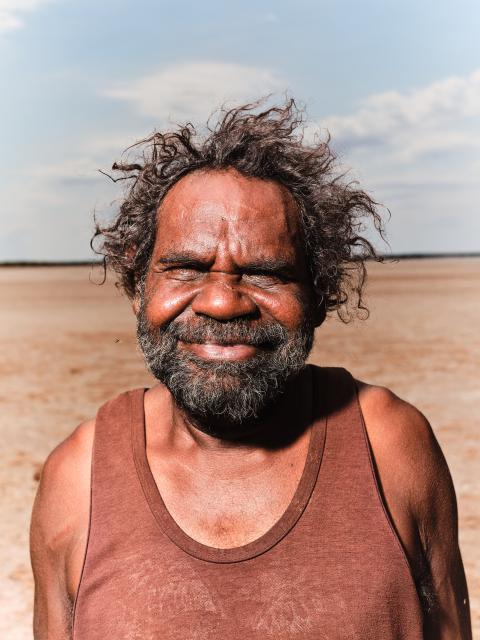 LanguagePitjantjatjara
Place of BirthKalgoorlie
HomeTjuntjuntjara
Biography
Timo Hogan, one of Australia's most compelling and celebrated voices in contemporary Indigenous art, represents the brilliance of a second generation of Spinifex painting talents. His mother, the artist Anne Hogan, fled her nomadic homelands to escape British nuclear testing in the Great Victoria Desert, at one point burying herself in a sand dune with family members as protection from "the big smoke." She settled at the Cundeelee Mission where she met Neville Niypula McArthur, the spiritual caretaker of Tjukurpa (creation dreaming) associated with Pukunkura (Lake Baker). He would later pursue his painting practice at multiple Indigenous art communities including the Warburton Art Project, Kayili Artists, Warakurna Artists, and the Spinifex Arts Project. Anne bore their son, Timo, at a hospital in nearby Kalgoorlie.
Observing his mother's art practice as a young adult, Hogan experimented with painting without fully committing to it. A transformative moment came in 2018 upon visiting his father's hospice bedside and making a sojourn immediately afterwards to McArthur's birthright country, the vast and remote salt pan of Lake Baker. The pilgrimage to his father's birthright site proved galvanic: "It was like watching the unlocking of a series of doors with memory concealed behind each" recalled Brian Hallett, the Spinifex Arts Project studio manager at the time. Embracing his role as the sites traditional caretaker, Hogan returned to the Spinifex community of Tjuntjuntjara invested with renewed authority to paint the spiritually powerful Tjukurpa of Lake Baker's Wati Kutjara (Two Men).
In his monumental paintings, Hogan reenacts the primordial story of ancestral beings that gave shape to the landforms of Lake Baker. Due to the millmillpa (dangerously potent) metaphysical resonances of the Wati Kutjara Tjukurpa narrative, its storyline can be related only in rough outline.
Two ancestral men, depicted by Hogan as abstract roundels, cautiously watch the lake's resident Wanampi (water snake being) slithering from its rock cave and skirting the dry shoreline: a fearsome creature aware of being observed. Capable of both benevolence and ferocity, the water serpent is as white as the lake's dry salt crust, reinforcing its supernatural powers.
Another episode of the narrative sees the two men spearing the Wanampi, causing it to writhe and carve the lake's boundaries. As the three ancestral beings move through the environment, they carve indelible traces of their presence: the sites defining landmarks.
Hogan's artworks map Lake Baker as physical landscape and spiritual songline. With a palette knife, he layers tones and textures to evoke the dry lake's shimmering surface in creamy whites, earthy ochres, and a splattering of muted colors. Trails of white dots trace the tracks of the two men, delineate geographic boundaries, and outline the Wanampi's serpentine form and segmented body, suggesting its internal forces.
Hogan's minimalist compositions convey the ominous power of the Wanampi in indirect glances, honouring the secretive protocols of the Wati Kutjara Tjukurpa while transmitting a sense of its spiritual depth to his global audience.
Profound meditation on the power of place, Hogan's work blends painterly abstraction with cultural storytelling to create pieces that feel both intimate and epic. Critics and collectors praise his creation of a refined visual language that captures the sacredness of Spinifex Country through a subtle interplay of tones and textures that evoke an indelible ancestral presence. Transcending literal representation, his paintings embody Lake Baker's sentient energy and cultural law, echoing modernist abstraction while remaining firmly rooted in Indigenous ontology.
A landmark achievement came in 2021 when Hogan won the prestigious Telstra National Aboriginal and Torres Strait Islander Art Award (NATSIAA), Australia's longest-running Indigenous art prize, cementing his status as a leading talent in Indigenous art. The award, , Australia's longest-running Indigenous art prize, recognized his ability to weave personal and communal histories into striking visual narratives. Judges described the winning canvas as a "masterful painting of international calibre" from a "remarkably confident artist with talent that exceeds his age and experience." This marked the first time an artist from the Spinifex Lands won the overall prize, and Hogan (then in his late 40s) was one of the youngest finalists that year. Hogan himself described the win as opening his heart, reflecting the emotional and cultural depth he invests in each piece.
Hogan has been a finalist in the Wynne Prize (Art Gallery of NSW, 2024) for another Lake Baker work, highlighting his ongoing critical recognition; his works also have been featured in high-profile exhibitions like the National Gallery of Victoria Trienniale (2023–2024) and Adelaide's Tarnanthi Festival.
Read LessAwards
- 2024: The Wynne Prize - Finalist
- 2021: Telstra National Aboriginal & Torres Strait Island Art Award (NATSIAA) - Winner
Collections
- Queensland Art Gallery | Gallery of Modern Art (QAGOMA)
- National Gallery of Victoria (NGV)
- Art Gallery of New South Wales (AGNSW)
- Art Gallery of Western Australia (AGWA)
- Art Gallery of South Australia (AGSA)
- Museum and Art Gallery of the Northern Territory (MAGNT)
- Museum of Contemporary Art Australia (MCA)
- National Gallery of Australia (NGA)
- Artbank Collection
- Kluge-Ruhe Aboriginal Art Collection
- Steve Martin & Anne Stringfield Collection
- Fondation Opale
![Australian Indigenous (Aboriginal and Torres Strait Islander) artwork by TIMO HOGAN of Spinifex Artists. The title is Lake Baker. [25-456] (Acrylic on Linen)](https://media.redotgallery.com/stockroom/gallery/l/artwork/t/lake-baker-6366-LARGE-2.jpg)
Lake Baker
25-456 (2025)
Acrylic on Linen
TIMO HOGAN
Lake Baker
25-456 (2025)
Acrylic on Linen
200 x 290cm | 78.74 x 114.17in
ENQUIRE
![Australian Indigenous (Aboriginal and Torres Strait Islander) artwork by TIMO HOGAN of Spinifex Artists. The title is Lake Baker. [24-159] (Acrylic on Linen)](https://media.redotgallery.com/stockroom/gallery/l/artwork/t/lake-baker-6205-LARGE-2.jpg)
Lake Baker
24-159 (2024)
Acrylic on Linen
TIMO HOGAN
Lake Baker
24-159 (2024)
Acrylic on Linen
200 x 230cm | 78.74 x 90.55in
ENQUIRE
![Australian Indigenous (Aboriginal and Torres Strait Islander) artwork by TIMO HOGAN of Spinifex Artists. The title is Lake Baker. [25-350] (Acrylic on Linen)](https://media.redotgallery.com/stockroom/gallery/l/artwork/t/lake-baker-6358-LARGE-2.jpg)
Lake Baker
25-350 (2025)
Acrylic on Linen
TIMO HOGAN
Lake Baker
25-350 (2025)
Acrylic on Linen
200 x 230cm | 78.74 x 90.55in
ENQUIRE
![Australian Indigenous (Aboriginal and Torres Strait Islander) artwork by TIMO HOGAN of Spinifex Artists. The title is Lake Baker. [24-164] (Acrylic on Linen)](https://media.redotgallery.com/stockroom/gallery/l/artwork/t/lake-baker-6206-LARGE-2.jpg)
Lake Baker
24-164 (2024)
Acrylic on Linen
TIMO HOGAN
Lake Baker
24-164 (2024)
Acrylic on Linen
200 x 137cm | 78.74 x 53.94in
ENQUIRE
![Australian Indigenous (Aboriginal and Torres Strait Islander) artwork by TIMO HOGAN of Spinifex Artists. The title is Lake Baker. [25-138] (Acrylic on Linen)](https://media.redotgallery.com/stockroom/gallery/l/artwork/t/lake-baker-6336-LARGE-2.jpg)
Lake Baker
25-138 (2025)
Acrylic on Linen
TIMO HOGAN
Lake Baker
25-138 (2025)
Acrylic on Linen
200 x 137cm | 78.74 x 53.94in
ENQUIRE
Timo's recent visit to Lake Baker
![Australian Indigenous (Aboriginal and Torres Strait Islander) artwork by TIMO HOGAN of Spinifex Artists. The title is Lake Baker. [25-137] (Acrylic on Linen)](https://media.redotgallery.com/stockroom/gallery/l/artwork/t/lake-baker-6335-LARGE-2.jpg)
Lake Baker
25-137 (2025)
Acrylic on Linen
TIMO HOGAN
Lake Baker
25-137 (2025)
Acrylic on Linen
200 x 580cm | 78.74 x 228.35in
ENQUIRE
Timo painting canvas #25-137 (200 x 580cm)
.jpg)
.jpg)
.jpg)
.jpg)
.jpg)
![Australian Indigenous (Aboriginal and Torres Strait Islander) artwork by TIMO HOGAN of Spinifex Artists. The title is Lake Baker. [24-187] (Acrylic on Linen)](https://media.redotgallery.com/stockroom/gallery/l/artwork/t/lake-baker-6207-LARGE-2.jpg)
Lake Baker
24-187 (2024)
Acrylic on Linen
TIMO HOGAN
Lake Baker
24-187 (2024)
Acrylic on Linen
200 x 290cm | 78.74 x 114.17in
ENQUIRE
Provenance
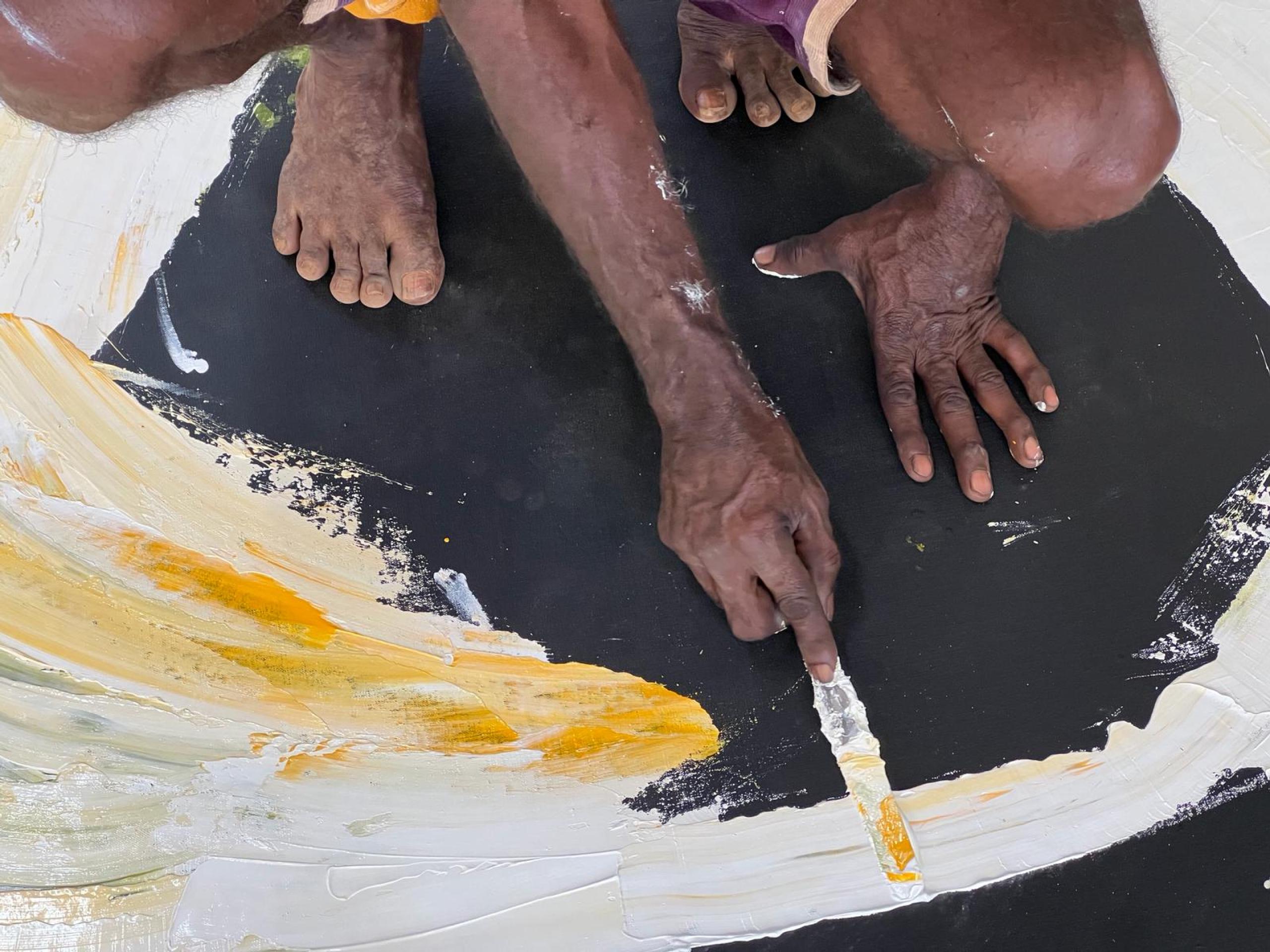
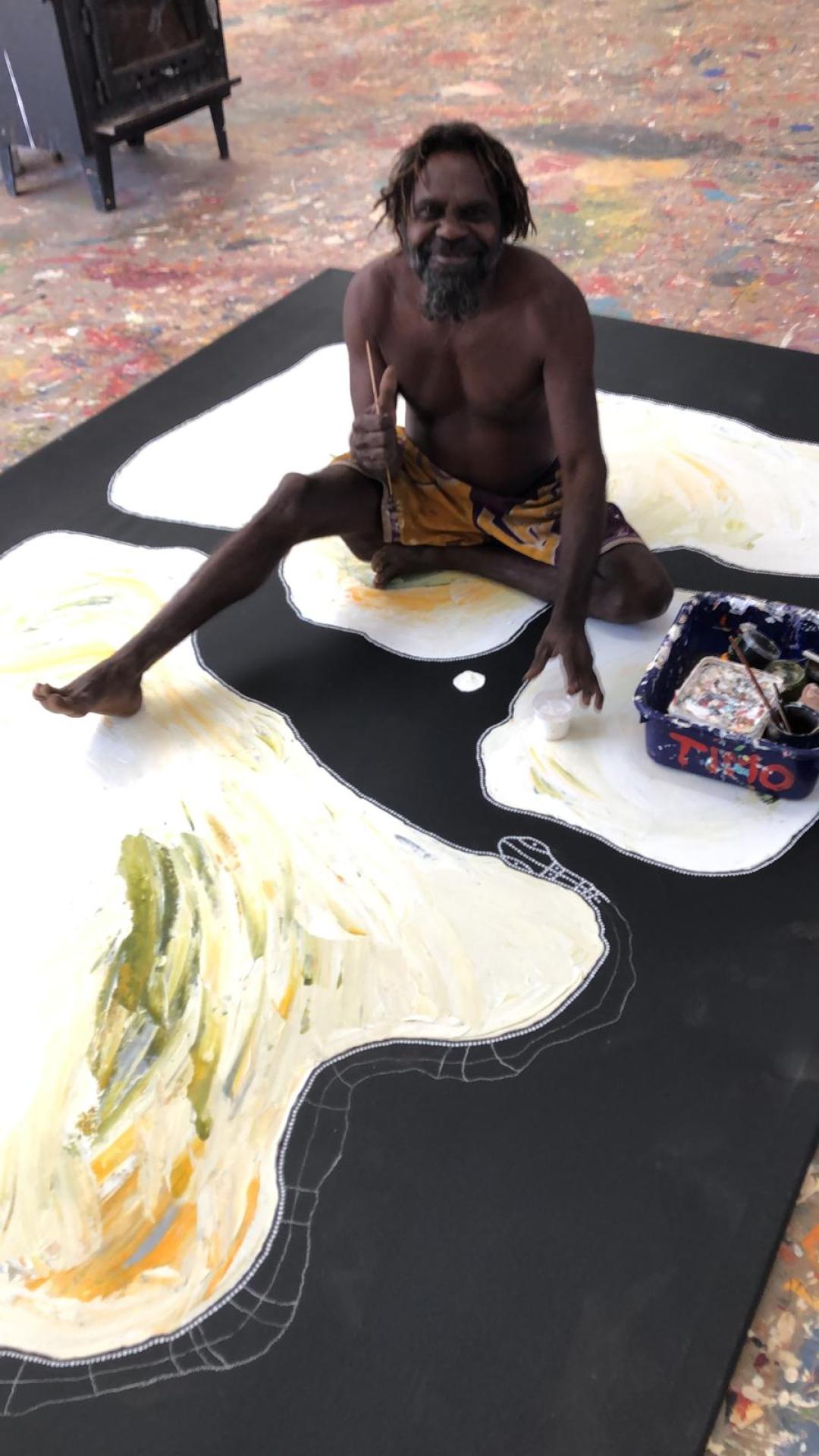
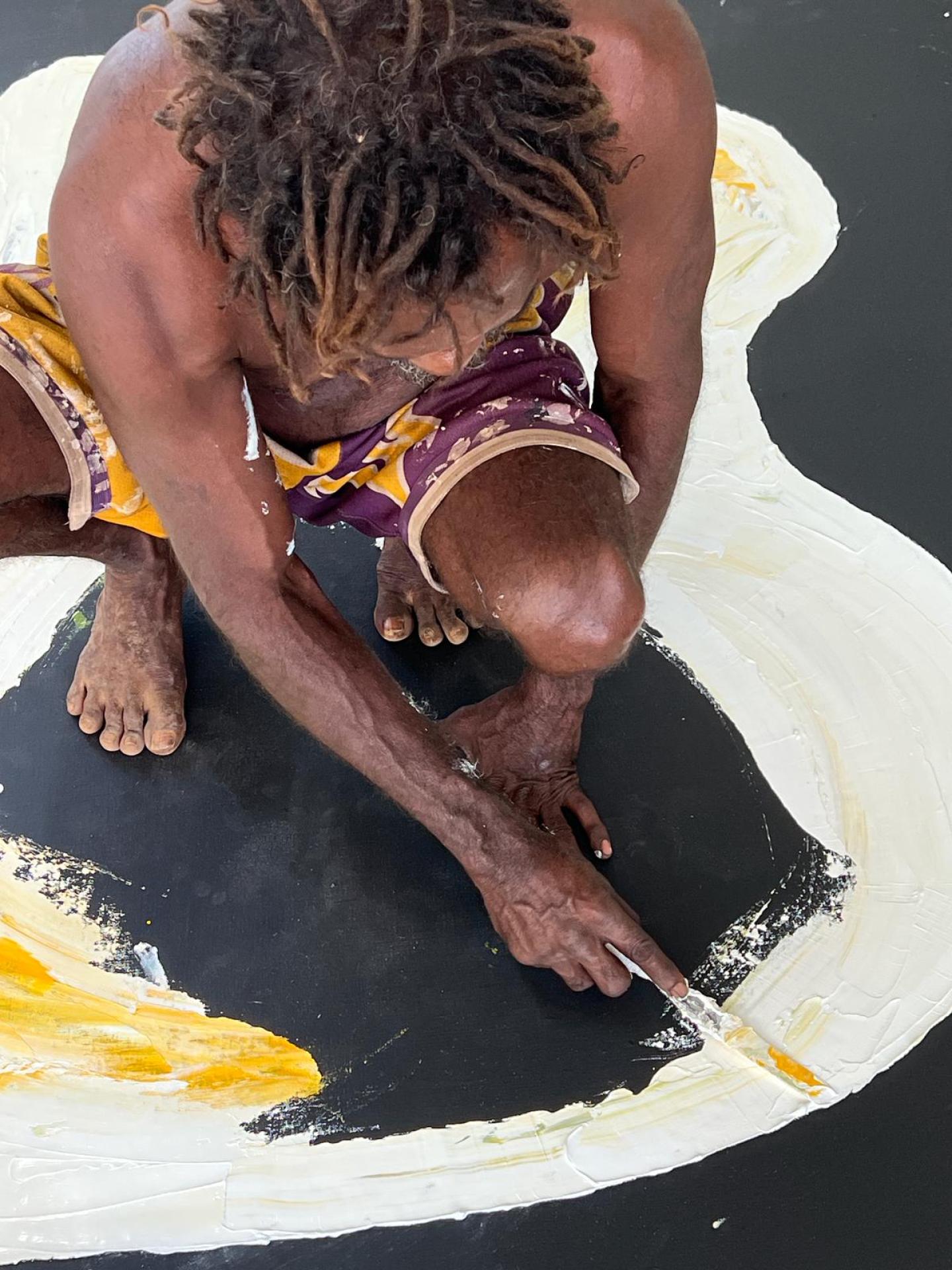
Finalist - WYNNE 2024Timo painting canvas #24-187 (200 x 290cm)
![Australian Indigenous (Aboriginal and Torres Strait Islander) artwork by TIMO HOGAN of Spinifex Artists. The title is Lake Baker. [25-363] (Acrylic on Linen)](https://media.redotgallery.com/stockroom/gallery/l/artwork/t/lake-baker-6349-LARGE-2.jpg)
Lake Baker
25-363 (2025)
Acrylic on Linen
TIMO HOGAN
Lake Baker
25-363 (2025)
Acrylic on Linen
200 x 137cm | 78.74 x 53.94in
ENQUIRE
![Australian Indigenous (Aboriginal and Torres Strait Islander) artwork by TIMO HOGAN of Spinifex Artists. The title is Lake Baker. [25-346] (Acrylic on Linen)](https://media.redotgallery.com/stockroom/gallery/l/artwork/t/lake-baker-6338-LARGE-2.jpg)
Lake Baker
25-346 (2025)
Acrylic on Linen
TIMO HOGAN
Lake Baker
25-346 (2025)
Acrylic on Linen
200 x 274cm | 78.74 x 107.87in
ENQUIRE
Timo painting canvas #25-346 (200 x 274cm)
.jpg)
.jpg)
.jpg)
.jpg)
![Australian Indigenous (Aboriginal and Torres Strait Islander) artwork by TIMO HOGAN of Spinifex Artists. The title is Lake Baker. [25-404] (Acrylic on Linen)](https://media.redotgallery.com/stockroom/gallery/l/artwork/t/lake-baker-6357-LARGE-2.jpg)
Lake Baker
25-404 (2025)
Acrylic on Linen
TIMO HOGAN
Lake Baker
25-404 (2025)
Acrylic on Linen
200 x 230cm | 78.74 x 90.55in
ENQUIRE
![Australian Indigenous (Aboriginal and Torres Strait Islander) artwork by TIMO HOGAN of Spinifex Artists. The title is Lake Baker. [25-304] (Acrylic and Sand on Linen)](https://media.redotgallery.com/stockroom/gallery/l/artwork/t/lake-baker-6346-LARGE-2.jpg)
Lake Baker
25-304 (2025)
Acrylic and Sand on Linen
TIMO HOGAN
Lake Baker
25-304 (2025)
Acrylic and Sand on Linen
137 x 110cm | 53.94 x 43.31in
ENQUIRE
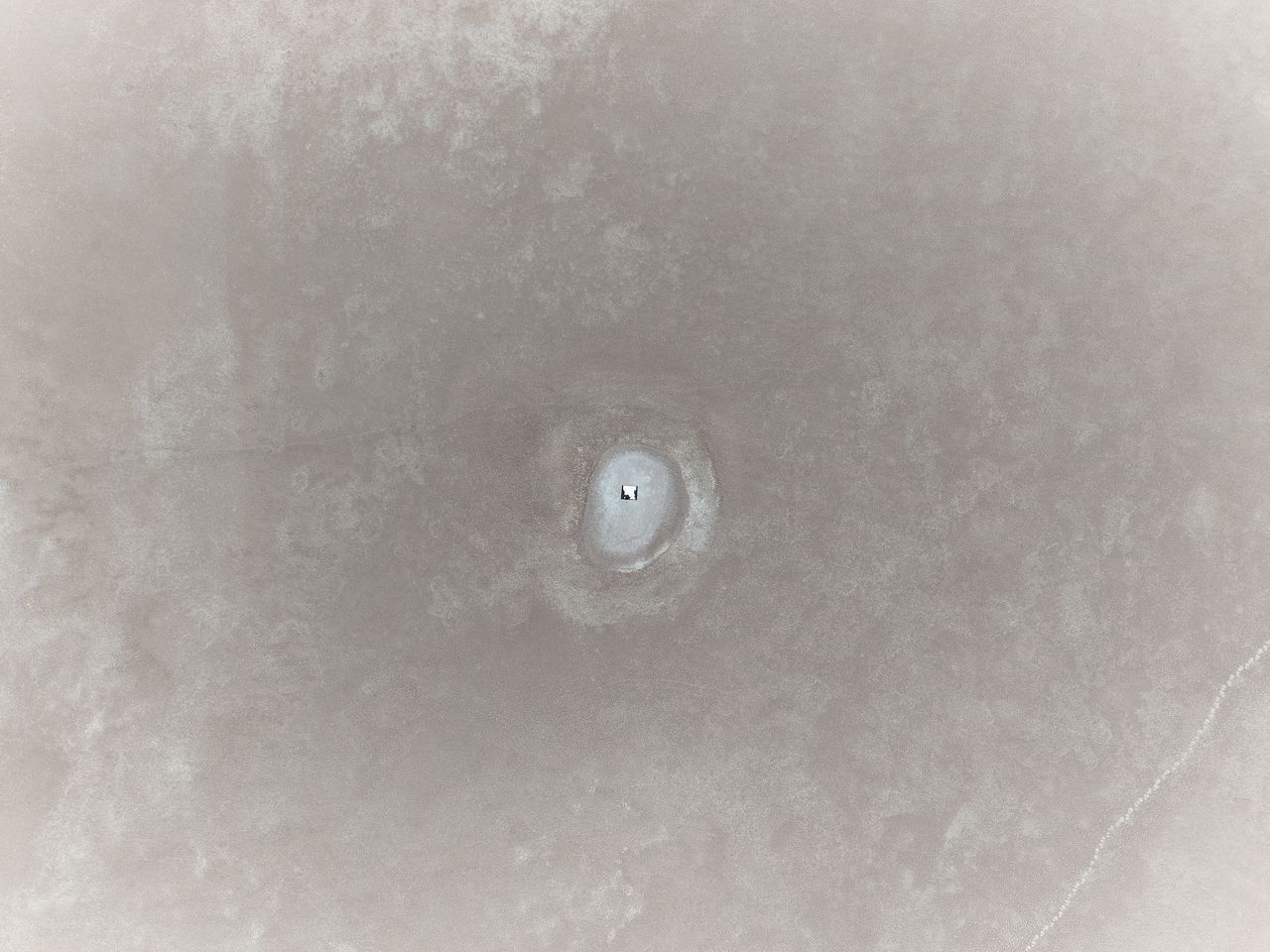
“when I paint the lake I am Kanparakanya,
making that lake.
Using that knife to cut the shape of
the lake on the canvas.
That Wanampi made that lake
in pain and anger.”
Timo Hogan 2026
Aerial view of Lake Baker | © Duncan Wright
![Australian Indigenous (Aboriginal and Torres Strait Islander) artwork by TIMO HOGAN of Spinifex Artists. The title is Lake Baker. [25-315] (Acrylic on Linen)](https://media.redotgallery.com/stockroom/gallery/l/artwork/t/lake-baker-6347-LARGE-2.jpg)
Lake Baker
25-315 (2025)
Acrylic on Linen
TIMO HOGAN
Lake Baker
25-315 (2025)
Acrylic on Linen
137 x 110cm | 53.94 x 43.31in
ENQUIRE
![Australian Indigenous (Aboriginal and Torres Strait Islander) artwork by TIMO HOGAN of Spinifex Artists. The title is Lake Baker. [25-97] (Acrylic on Linen)](https://media.redotgallery.com/stockroom/gallery/l/artwork/t/lake-baker-6334-LARGE-2.jpg)
Lake Baker
25-97 (2025)
Acrylic on Linen
TIMO HOGAN
Lake Baker
25-97 (2025)
Acrylic on Linen
137 x 110cm | 53.94 x 43.31in
ENQUIRE
Curator's Statement
LOVE LOVE LOVE
![Australian Indigenous (Aboriginal and Torres Strait Islander) artwork by TIMO HOGAN of Spinifex Artists. The title is Lake Baker. [25-84] (Acrylic on Linen)](https://media.redotgallery.com/stockroom/gallery/l/artwork/t/lake-baker-6333-LARGE-2.jpg)
Lake Baker
25-84 (2025)
Acrylic on Linen
TIMO HOGAN
Lake Baker
25-84 (2025)
Acrylic on Linen
137 x 110cm | 53.94 x 43.31in
ENQUIRE
In collaboration with
and
Timo on Lake Baker | © Duncan Wright
Do you have any questions?
Please get in touch if you want to know any more about this exhibition.
CONTACT US
04 Mar 2026
ReDot Fine Art Gallery, in collaboration with the renowned Spinifex Arts Project Aboriginal Corporation, is proud to announce an exclusive exhibition featuring two distinguished senior Pitjantjatjara artists from the Spinifex community: Timo Hogan and Kunmanara Presley.
Hosted at the historic National Arts Club in Gramercy Park, this presentation offers New York audiences a rare opportunity to experience the profound depth and spiritual power of contemporary Australian Indigenous art from the remote community of Tjuntjuntjara in Western Australia's Great Victoria Desert.